
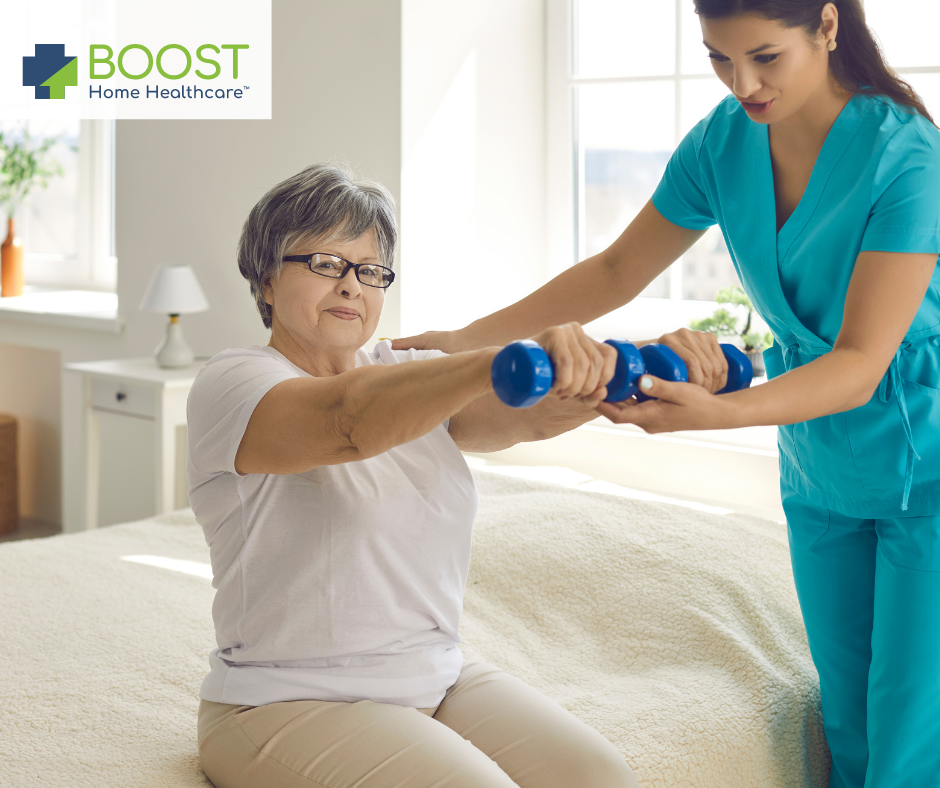
Did you know October is National Physical Therapy Month? This observation celebrates the physical therapy profession—from its benefits to the impact that physical therapy professionals have on improving the health and well-being of individuals.
Home health physical therapy is one way to provide this service to patients. Also known as at-home physical therapy, this valuable service supports the recovery process of individuals who have experienced an injury, had surgery, or are managing a chronic condition, all from the comfort of their own homes. This type of service is personalized, one-on-one care provided by a licensed physical therapist or a physical therapist assistant, enabling patients to restore normal mobility, enhance quality of life and increase comfort without needing to visit a hospital or skilled nursing facility.
Keep reading for insights into at-home physical therapy, its benefits, who can benefit from it, the costs involved and how you can find the best care for you or your loved one.
Meeting the Care Needs of Your Loved One in the Comfort of their Home
In a moment, your life or your loved one’s life can take a wrong turn, leading to injury and the need for specialized care like at-home physical therapy. These services can make a great difference in overall care outcomes because they can help individuals improve strength, balance, gait, and activities of daily living so they can be safer and more self-sufficient at home. Candidates for physical therapy at home include the following:
- Older adults who struggle with mobility issues or have undergone orthopedic procedures like hip replacement, total knee arthroplasty or knee surgery can rehab sooner and regain strength and independence more easily with in-home physical therapy thanks to strengthening exercises and manual therapy.
- Individuals facing chronic condition management, such as chronic obstructive pulmonary disease (COPD) or heart failure, are often prescribed at-home therapy to help increase lung function and better cardiovascular health and mobility.
- Those facing injury recovery from injuries like fractures or muscle strains can regain mobility and strength and avoid the discomfort of traveling to a clinic while still receiving the necessary care.
- Individuals with neurological conditions may require physical therapy, occupational therapy, or speech therapy to improve self-care and daily living skills.
Who Provides At-Home Physical Therapy?
Physical therapy services are provided by licensed professionals who specialize in restoring mobility and function. Physical therapists (PTs) evaluate, diagnose, and manage health conditions and movement problems in people of all ages and abilities, empowering individuals to take an active role in their care. Specifically, they provide hands-on care, patient education, and prescribed movement. Physical therapist assistants (PTAs) also provide care, but they do so under a physical therapist’s direction and supervision. In their role, PTAs teach exercises prescribed by a PT, show how to safely walk with crutches, canes, or walkers, and provide other prescribed treatments to relieve pain, aid healing, and promote better movement.
Once at-home PT has been prescribed to you or your loved one, a physical therapist or physical therapist assistant will visit your residence and provide hands-on care, patient education, and prescribed movement. Physical therapy services are part of the first line of care options for rehabilitation and strengthening as they are effective and safe. Most importantly, the practice of physical therapy can be found in settings across the entire health care system, including acute care, aquatics, cardiovascular and pulmonary, geriatrics, home health, neurology, oncology, orthopedics, pediatrics, pelvic health, and sports.
In some cases, the home health team may also include other healthcare professionals, such as occupational therapists and speech therapists, depending on your health needs or those of your loved one. These therapists work collaboratively to create a comprehensive care plan to improve overall health and mobility.
Benefits of At-Home Physical Therapy
Physical therapy at home can be a critical step in the recovery process, and it offers several benefits, making it a preferred option for many patients, especially those who may be facing difficulty with daily tasks, are recovering from surgery or a health condition, are homebound and have declining communication capabilities. Here are some key advantages:
- Convenience: Receiving home physical therapy means you don’t need to travel to a local outpatient clinic; this provides a heightened sense of comfort for patients recovering from surgery or those with limited mobility.
- Personalized Care: Since therapy takes place in your own home, at-home physical therapists can assess your living environment and provide strategies during each therapy session to improve safety, such as fall prevention tips or recommendations for assistive devices. They can then design a personalized care plan tailored specifically to your environment and health needs. At-home PT also helps in targeting treatment without the distractions that often occur in physical rehabilitation centers.
- Comfort & Familiarity: Being at home allows patients to perform exercises and receive treatment in a familiar setting, accelerating their ability to restore normal mobility and improve overall health.
- Education & Insights: Therapists provide essential education on health and exercise, equipping patients with the knowledge to maintain and improve their health long after the therapy ends.
- Safety & Accessibility Improvements: Patient education helps patients understand how to make their living spaces safer and more accessible, a crucial aspect of home care physical therapy. These adjustments help prevent injuries and facilitate easier movement around the house.
- Manage Pain & Avoid Opioids: While opioids are suitable in some treatment plans, they tend to mask pain. PTs help patients manage pain through effective therapy practices. The CDC recommends physical therapy as an option to manage long-term pain.
- Family Involvement & Support: In-home physical therapy sessions enable family members and caregivers to actively participate in the patient’s recovery process. This support system is vital for emotional encouragement and assists in adhering to the prescribed exercise regimen.
- Flexibility in Scheduling: Home health care offers a flexible schedule that adapts to the patient’s daily routines and energy levels, making integrating therapy sessions without the stress of leaving home easier.
- Reduced Risk of Infections: For immunocompromised patients, home physical therapy may reduce the risk of infections that might be encountered in more public healthcare settings.
- Continuity of Care: Patients often receive care from the same therapist, which enhances the continuity of treatment and builds a trusting relationship, which is critical for effective therapy outcomes.
- Improved Mobility: One of the main goals of physical therapy is to restore normal mobility and independence. Patients often experience faster recovery times with at-home physical therapy because they are treated in a familiar environment, reducing stress.
- Prevention of Rehospitalization: For individuals with conditions like heart failure or after procedures like total knee arthroplasty, home care physical therapy plays a crucial role in preventing complications and the need for rehospitalization.
- Coverage & Cost Effectiveness: Many insurance plans, including Medicare, recognize home health physical therapy as a covered service. This can make in-home PT an economical choice that reduces the overall out-of-pocket payment for patients.
Receiving Physical Therapy Care at Home: What to Expect During a Session
During the first visit, the physical therapist will conduct an initial evaluation to assess the current state of health, mobility, and any limitations caused by injury, surgery, or the patient’s chronic condition. They will develop a treatment plan tailored to specific health goals, such as reducing pain, improving mobility, or regaining strength.
As the sessions go on, PTs will provide patient education by explaining the condition, the purpose of each physical therapy exercise, and how to perform them safely, and move on to hands-on care.
Many sessions may include manual therapy techniques, such as joint mobilization or electrical stimulation, to promote healing and restore function. The PT will also design a home exercise program to be followed in between therapy sessions, which is critical for achieving the best possible outcomes.
Lastly, alongside physical exercises, therapy professionals will provide guidance on self-care strategies to help manage pain and improve quality of life. Depending on the plan of care, PT sessions usually last 45 minutes to an hour. They may be prescribed to take place multiple times per week.
How Much Does At-Home Physical Therapy Cost?
Home care physical therapy costs can vary depending on location, the complexity of each case and the number of visits required. Fortunately, many insurance companies cover in-home physical therapy services, especially if a doctor deems it medically necessary. The following are common ways to cover treatments under home health care:
- Medicare and Medicare Advantage – For Medicare beneficiaries, covered home health services are provided at no cost to the patient. For patients covered by Medicare Advantage plans or private insurance, covered home health services may be subject to co-pays.
- Medicaid/State-Managed Medicaid Programs
- VA Benefits
- Workers Compensation
- Long-term Care Insurance
- Private Pay
- Insurance Billing – Each insurance company has specific guidelines outlining eligibility for home health services. Most commercial insurance companies cover home health services with little or no out-of-pocket expense to the patient.
Increase Mobility & Independence with Our Home Health Physical Therapy Services
Whether you or your loved one find it challenging to leave home due to mobility issues, recent surgery, or other health concerns, home health physical therapy is a critical next step that can improve your mobility, accelerate recovery, restore physical strength, and, ultimately, help you regain independence. With the guidance of a physical therapist, you can receive personalized care tailored to your unique needs from the comfort of your own home.
When you work with a Boost Home Healthcare physical therapist, you get the undivided attention you need and the encouragement you deserve. That’s because our home healthcare specialists come to your home to treat you and only you.
Boost Home Healthcare delivers the care you or your loved one needs in the space you love. We offer more convenient – and often more affordable – care compared to hospitals or skilled nursing facilities. As an added benefit, our approach is entirely personalized.
Are you ready to learn how home health services can support your or your loved one’s physical therapy needs? Start your assessment today by connecting to a Boost Home Healthcare location near you.
Helpful Resources: